

Parts inventory can make or break a heavy-duty truck repair shop's profit. If your team cannot see what is in stock, where it is stored, what it costs, and which job it belongs to, profit leaks out through missed billing, rush freight, dead stock, and technicians walking the parts room instead of working on trucks.
Truck parts inventory software helps heavy-duty repair shops track stock, assign parts to work orders, manage purchase orders, set reorder points, process returns, and keep parts costs connected to invoices. A strong system does more than count parts. It connects inventory with the repair workflow so your shop can keep trucks moving and protect margin on every job.
What Is Truck Parts Inventory Software?
Truck parts inventory software is a system for managing the parts, consumables, vendors, purchase orders, pricing, and stock levels inside a truck repair shop.
For a heavy-duty shop, inventory is not just a shelf count. Parts need to connect to:
- Work orders
- Estimates
- Purchase orders
- Supplier records
- Retail pricing
- Technician usage
- Invoices
- Returns
- Reporting
A spreadsheet can list part numbers, but it usually cannot keep up with the pace of a working repair shop. When technicians are pulling parts, service advisors are building estimates, and office staff are creating invoices, inventory needs to update as the work happens.
Why Inventory Problems Cost Truck Repair Shops So Much
Bad inventory management rarely looks like one big loss. It usually shows up as small problems that repeat every week.
Excess Inventory Ties Up Cash
Too much stock can feel safe, but it locks money into parts that may sit for months. That cash could be used for payroll, tools, marketing, training, or faster-moving inventory.
Excess inventory also creates storage problems. Shelves fill up, bins become harder to organize, and parts that should be easy to find start disappearing inside the parts room.
Dead Stock Becomes a Hidden Expense
Truck parts change as equipment, suppliers, and customer needs change. Slow-moving or obsolete parts take up space, distort your inventory value, and make it harder to see what the shop actually needs.
Without reports on usage and movement, dead stock can sit quietly until someone finally notices how much money is sitting on the shelf.
Part Shortages Delay Repairs
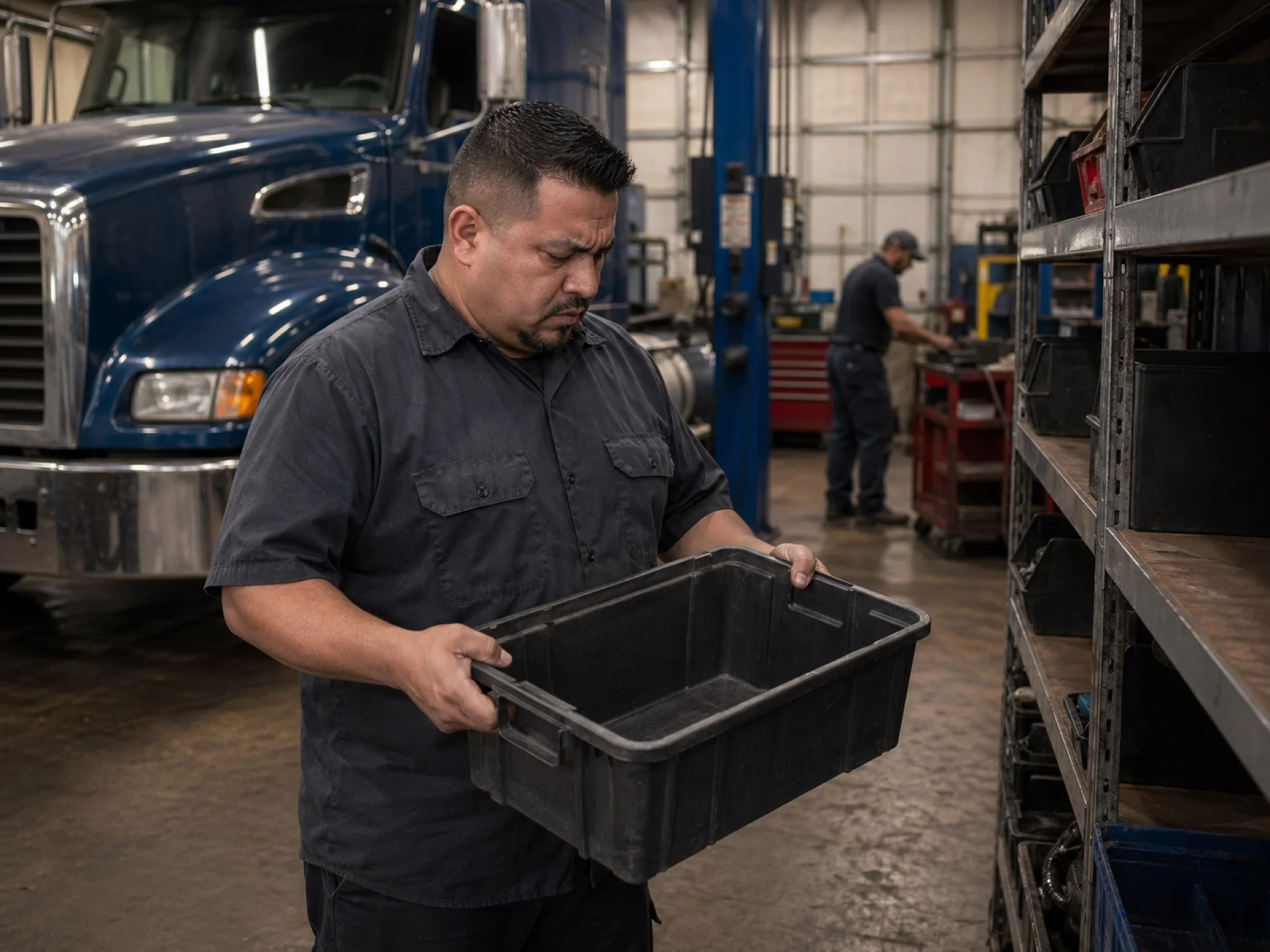
Running out of the wrong part at the wrong time can stop an entire job. A technician waits. A bay stays occupied. A customer's truck stays down. The shop may need to place a rush order, pay more for shipping, or delay other scheduled work.
For fleet customers and heavy-duty operators, downtime is not just inconvenient. A truck that is not moving is usually a truck that is not earning.
Missing Parts Create Missed Billing
If a technician uses a part but it never gets attached to the work order, the shop may not bill for it. That is direct margin loss.
This is one of the biggest reasons repair shops need inventory software connected to work orders and invoices. The part should not live in one system while the job lives somewhere else.
Disorganized Inventory Wastes Technician Time
Technicians should not spend billable time hunting for filters, sensors, fittings, shop supplies, or ordered parts. If your team has to ask around, check multiple shelves, or search old notes to find parts, the inventory process is slowing the whole shop down.
The Three Types of Parts Your Shop Needs to Manage
Most truck repair shops need to manage more than one kind of inventory. A good system should make each category clear.

Stock Parts
Stock parts are the items you keep on hand because your shop uses them often. These may include filters, brake components, fluids, sensors, belts, hoses, fittings, and other common repair parts.
Truck parts inventory software should help you:
- See live quantities
- Set reorder thresholds
- Track usage over time
- Identify fast-moving and slow-moving parts
- Avoid overstocking
- Avoid running out of high-use items
By-Order Parts
By-order parts are ordered for a specific repair job. These can be expensive, specialized, or less commonly used.
For these parts, the system should help your team:
- Create a purchase order
- Connect the part to the right work order
- Track order status
- See whether the part has been received
- Make sure it is billed correctly
This matters because special-order parts are easy to lose track of when updates live in emails, vendor portals, paper notes, or someone's memory.
Consumables
Consumables are the small items that keep the shop moving: shop towels, cleaners, fluids, fasteners, gloves, fittings, and other supplies.
They may seem minor, but they affect job cost and shop efficiency. If nobody tracks them, they become invisible expenses. A good inventory process helps your shop monitor usage and understand the true cost of each job.
Must-Have Features in Truck Parts Inventory Software
The right inventory software should fit the way a repair shop actually works. These are the features to look for.
Real-Time Stock Updates
Your team should be able to see what is in stock without walking to the parts room or asking the parts manager. Real-time updates help prevent double ordering, stockouts, and wrong assumptions about what is available.
In Easy Truck Shop, the inventory management feature is built to show live inventory status so shops can monitor stock levels and reduce shortages.
Reorder Alerts
Reorder alerts help your shop restock before a shortage stops a job. Instead of waiting until someone notices an empty bin, your system should let you set thresholds and notify the team when a part needs to be reordered.
This is especially important for fast-moving parts and supplies that technicians use every day.

Purchase Orders
Purchase orders keep buying organized. They show what was ordered, from whom, for which job, and whether it has been received.
Easy Truck Shop supports creating and managing purchase orders directly in the system, including order status tracking from pending to delivered.
Supplier Management
Truck repair shops often work with multiple suppliers. Inventory software should help track supplier history, part costs, and order activity so the shop can make better buying decisions.
When supplier information is connected to inventory, the team can order parts faster and reduce manual back-and-forth.
Parts Linked to Work Orders
This is one of the most important features. Parts should connect directly to the job where they are used.
When parts are tied to work orders, the shop can:
- See the real cost of each repair
- Reduce missed billing
- Improve estimate accuracy
- Track parts usage by job
- Create cleaner invoices
If parts and work orders are disconnected, your team has to rebuild the story manually at invoice time.
Price Matrices and Profit Margin Control
Inventory is not only about quantity. It is also about margin.
Easy Truck Shop supports price matrices that help calculate retail prices based on desired profit margins. This helps keep pricing more consistent and reduces the risk of undercharging for parts.
QR Code Part Scanning
QR codes make part identification faster and more accurate. Easy Truck Shop allows shops to print and scan QR codes for parts, helping the team identify items and update inventory with less manual entry.
This is useful when technicians or parts staff need to add parts to an invoice or sales record quickly from a mobile device.
Inventory Analytics
Reports help you understand what is happening in the parts room. Your software should show inventory usage, costs, slow-moving items, and patterns that affect purchasing decisions.
Without analytics, your shop is guessing. With analytics, you can adjust reorder points, reduce dead stock, and stock the parts that actually move.
Parts Returns
Returns are part of repair shop inventory. A system should help your team process returns, update inventory levels, and keep records clean when parts go back to a supplier or customer.
Easy Truck Shop includes tools for managing parts returns and keeping inventory accurate after the return is processed.
Spreadsheet vs. Truck Parts Inventory Software
Spreadsheets can work when a shop is very small. But once you have multiple technicians, recurring fleet work, purchase orders, and regular invoicing, spreadsheets become a bottleneck.

How Inventory Software Improves the Repair Workflow
Here is what a cleaner parts workflow can look like:
- A technician or service advisor identifies the part needed for a repair.
- The parts team checks live inventory.
- If the part is in stock, it is added to the work order.
- If the part is not in stock, a purchase order is created.
- The order status is tracked until the part is received.
- The part is attached to the job.
- Pricing and markup are applied.
- The part appears on the invoice.
- Inventory levels update.
- Reports show usage, cost, and margin.
That flow is hard to maintain with paper, spreadsheets, and separate tools. The goal is not just cleaner inventory. The goal is a cleaner repair process from estimate to invoice.

How Easy Truck Shop Helps Manage Parts Inventory
Easy Truck Shop is built for heavy-duty truck and equipment repair workflows, where inventory needs to stay connected to the rest of the shop.
With Easy Truck Shop, repair shops can:
- Monitor stock levels in real time
- Set reorder thresholds
- Order parts from suppliers
- Use price matrices to calculate retail prices and protect profit margins
- Print and scan QR codes for part identification and inventory updates
- Create and manage purchase orders
- Track order status
- Process parts returns
- Access reports on inventory usage and costs
- Keep inventory connected to repair shop operations
The main advantage is that inventory does not sit alone. It supports the work order, estimate, invoicing, and reporting process that keeps the shop running.
How to Choose Truck Parts Inventory Software
Before choosing a system, ask these questions:
- Can it track stock levels in real time?
- Can it connect parts to work orders?
- Can it create and manage purchase orders?
- Can it track order status?
- Can it process parts returns?
- Can it help calculate retail prices and margins?
- Can the team scan parts with QR codes or barcodes?
- Can it show inventory usage and cost reports?
- Can it support mobile or service-truck workflows?
- Is it simple enough for technicians and parts staff to use every day?
The right software is not the one with the longest feature list. It is the one your team will actually use while work is moving through the shop.
Frequently Asked Questions
What is truck parts inventory software?
Truck parts inventory software helps repair shops track parts, stock levels, suppliers, purchase orders, pricing, returns, and parts usage. In a truck repair shop, it should also connect inventory to work orders, estimates, and invoices.
Why do truck repair shops need inventory software?
Truck repair shops need inventory software because parts directly affect repair speed, job cost, and profit margin. Without accurate inventory tracking, shops risk stockouts, rush orders, missed billing, dead stock, and wasted technician time.
Can Easy Truck Shop track purchase orders?
Yes. Easy Truck Shop supports purchase order management, including creating purchase orders and tracking order status from pending to delivered.
Can Easy Truck Shop use QR codes for parts?
Yes. Easy Truck Shop supports QR code part scanning. Shops can print and scan QR codes to identify parts and update inventory more accurately.
Is a spreadsheet enough for repair shop inventory?
A spreadsheet may work for a very small shop with limited parts. But once a shop has multiple technicians, purchase orders, recurring customers, service trucks, or regular invoicing, spreadsheets usually create delays and errors.
How does inventory software help protect profit margins?
Inventory software helps protect profit margins by tracking part costs, applying consistent pricing rules, reducing missed billing, and showing how parts affect job profitability.
What is the biggest hidden cost of poor inventory management?
The biggest hidden cost is usually lost productivity and missed margin. Technicians waste time looking for parts, jobs wait on missing items, and parts may be used without being billed correctly
Related Articles
Discover more articles on related topics to expand your knowledge.

The Hidden Costs of Inefficient Inventory Management in Truck Repair
